
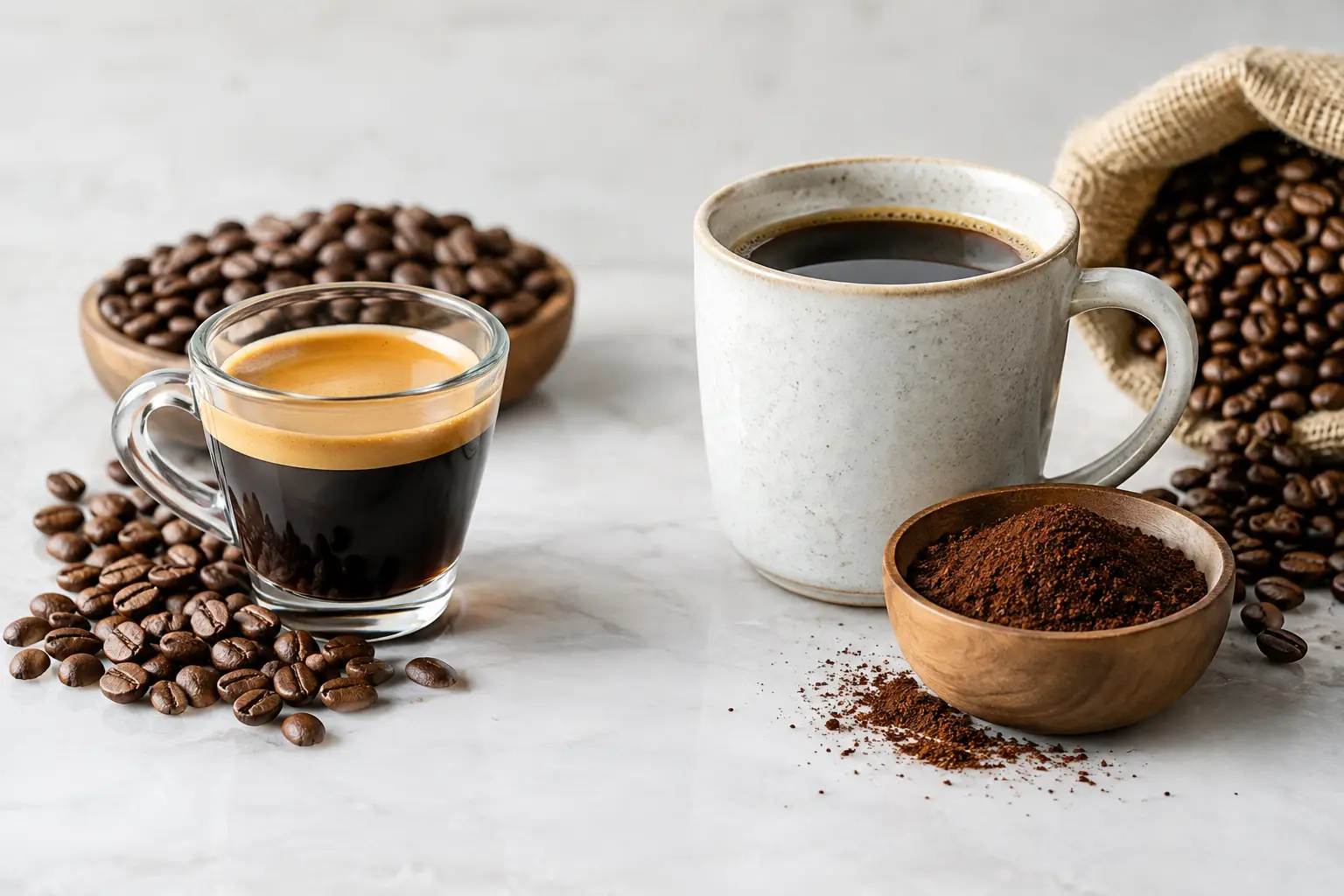
The espresso blend versus single origin question is not about finding one coffee that is objectively better. It is about matching the cup to the moment. A rich flat white on a chilly Fore Street morning asks for something different from a slow black coffee enjoyed between shops, meetings or lectures.
At Creeks Cuppa, we think good coffee should feel welcoming, not like a test you have to pass. Knowing the difference can help you order with more confidence, spot flavours you genuinely enjoy and get more from the locally roasted beans in your cup.
What is an espresso blend?
An espresso blend combines beans from two or more origins. A roaster might bring together a chocolatey Brazilian coffee, a sweet coffee from Colombia and a small amount of fruit-forward East African coffee. The aim is not to hide where the beans came from. It is to build a balanced flavour that works particularly well through an espresso machine.
That matters because espresso is concentrated. In a small shot, sharp acidity can become intense, bitterness can feel louder and a tiny adjustment to the grind can change the result. A well-designed blend gives a barista a broad, dependable flavour range to work with.
You will often find notes of chocolate, caramel, toasted nuts, brown sugar or gentle stone fruit in an espresso blend. These are not added flavours. They are natural tasting notes created by the bean variety, growing conditions, processing and roast profile.
For the person rushing along Fore Street with a takeaway latte, this consistency is a real benefit. Your coffee should still taste like the drink you were looking forward to: sweet enough, full enough and properly satisfying, rather than a gamble before 9am.
Why blends suit milk drinks so well
Milk brings sweetness and body to coffee, but it can soften delicate flavours. A blend is often built to hold its own in a cappuccino, latte or flat white, giving you that familiar coffee presence rather than a cup that tastes mostly of warm milk.
A good blend does not need to be dark, burnt or bitter to do this. In fact, the best ones tend to be comfortably sweet, rounded and textured, with enough character to cut through milk without taking over the whole drink. Think cocoa, biscuit and caramel meeting silky steamed milk.
That is why blends are a favourite for everyday espresso drinks. They are approachable for newer coffee drinkers and still rewarding for people who pay attention to what is in the cup.
What is a single-origin coffee?
A single-origin coffee comes from one defined place. Depending on the coffee, that may mean a single country, region, farm, cooperative or even a particular lot from one harvest. The more specific the origin, the more clearly you can taste the personality of that coffee.
A washed Ethiopian coffee might bring floral notes, citrus and tea-like clarity. A natural-process coffee from Brazil may lean towards hazelnut, berries and a creamy sweetness. A coffee from Colombia could offer red apple, caramel and a lively but balanced finish. No origin has one fixed flavour, but the point is that a single origin lets a distinctive character come through.
Single origins can be brilliant as espresso. They can also be surprising. A shot might taste bright and juicy one day, then need a slight adjustment to keep it at its best as the beans rest and the weather changes. That is part of the appeal for curious coffee drinkers, and part of the work for a careful barista.
Why single origins can feel more expressive
Where a blend aims for harmony, a single origin often celebrates contrast. You may notice a sharper lemon-like acidity, a ripe berry note or a finish that feels clean and delicate rather than heavy and chocolatey. For some people, that is exactly what makes coffee exciting.
If you usually order an Americano, espresso or filter coffee, single origins give you more room to explore. Without much milk in the way, their fruit, florals and sweetness are easier to notice. A seasonal single origin can make a familiar morning order feel new without becoming fussy.
That does not mean every single origin is light, acidic or difficult. Some are rich, smooth and deeply comforting. It depends on the producer, processing method, roast and brew recipe. The label tells you where a coffee comes from, not whether you will love it.
Espresso blend versus single origin: the real differences
The quickest way to understand espresso blend versus single origin coffee is to think about purpose. Blends are usually designed for consistency and balance. Single origins are chosen for specificity and character.
With a blend, the roaster has more ways to fine-tune the final cup. If one component adds sweetness and body while another brings a little brightness, the result can stay pleasing across a busy service. This makes blends especially practical for cafés making lots of espresso drinks throughout the day.
With a single origin, the coffee is more exposed. Its best features are allowed to lead, whether that is plum-like fruit, cocoa depth, florals or a clean citrus finish. When it is dialled in well, the cup can be memorable. When it is brewed carelessly, it can taste thin, overly sharp or muddled more quickly than a forgiving blend.
Neither option is a shortcut, and neither is automatically more ethical. Responsible sourcing depends on how roasters buy coffee, how transparently they work with producers and whether quality is valued throughout the chain. A thoughtful blend can be traceable and carefully sourced. A single origin can be excellent, but the origin name alone is not a guarantee.
Choose your coffee by how you like to drink it
If your regular order is a latte, cappuccino, mocha or flat white, start with an espresso blend. Its rounded sweetness and fuller body tend to work beautifully with steamed milk. It is the reliable choice when you want a coffee you will crave rather than a flavour puzzle before your first meeting.
If you drink espresso straight, enjoy a short black or order an Americano, try a single origin when one is available. You may find more detail in the cup, especially as it cools. Take a sip when it arrives, then another a few minutes later. Coffee changes as the temperature drops, and the sweeter notes often become clearer.
For iced drinks, there is no hard rule. Blends can give an iced latte or iced mocha a strong, chocolatey backbone. A fruitier single origin can make an iced Americano feel bright and refreshing, especially on a warm Devon afternoon. Ask what the current coffee is tasting like rather than choosing purely by the label.
If you are unsure, tell the barista what you usually enjoy. “I like it smooth, not too bitter” is useful. So is “I want something fruity” or “I want to taste the coffee through the milk.” Coffee talk does not need to be technical to be helpful.
Consistency is a craft, not corporate sameness
There is a misconception that choosing a blend means settling for something ordinary. At an independent café, consistency is earned every day. It comes from fresh coffee, accurate weighing, adjusting the grinder, watching extraction times and texturing milk with care.
Beans shift as they age after roasting. Humidity changes. A grinder can need a small tweak halfway through service. The barista’s job is to keep tasting and responding, so the espresso remains sweet, balanced and full of flavour. No corporate nonsense, just attention to the cup in front of you.
Single origins require the same care, sometimes with an even narrower sweet spot. Their changing character gives seasonal coffees a sense of place, but it also means the recipe has to be treated as a starting point, not a fixed instruction.
There is room for both on the coffee bar
The best coffee menus make space for dependable favourites and a little curiosity. An espresso blend can be the heart of a café programme: a reliable, comforting base for the flat whites, lattes and cappuccinos that keep Fore Street moving. Single origins can bring a seasonal spark, offering something distinct for anyone ready to try a different side of coffee.
You do not need to choose a side for life. Order the blend when you want the familiar comfort of chocolatey espresso and perfectly textured milk. Choose a single origin when you have time to notice the details, or when a barista describes a flavour that sounds like your sort of thing.
Next time you stop for coffee, start with your mood rather than the menu jargon. Fancy, bright, cosy or strong are all perfectly good answers. The right cup is the one that gives your day a better start, a proper pause or an excuse to stay for one more chat.