
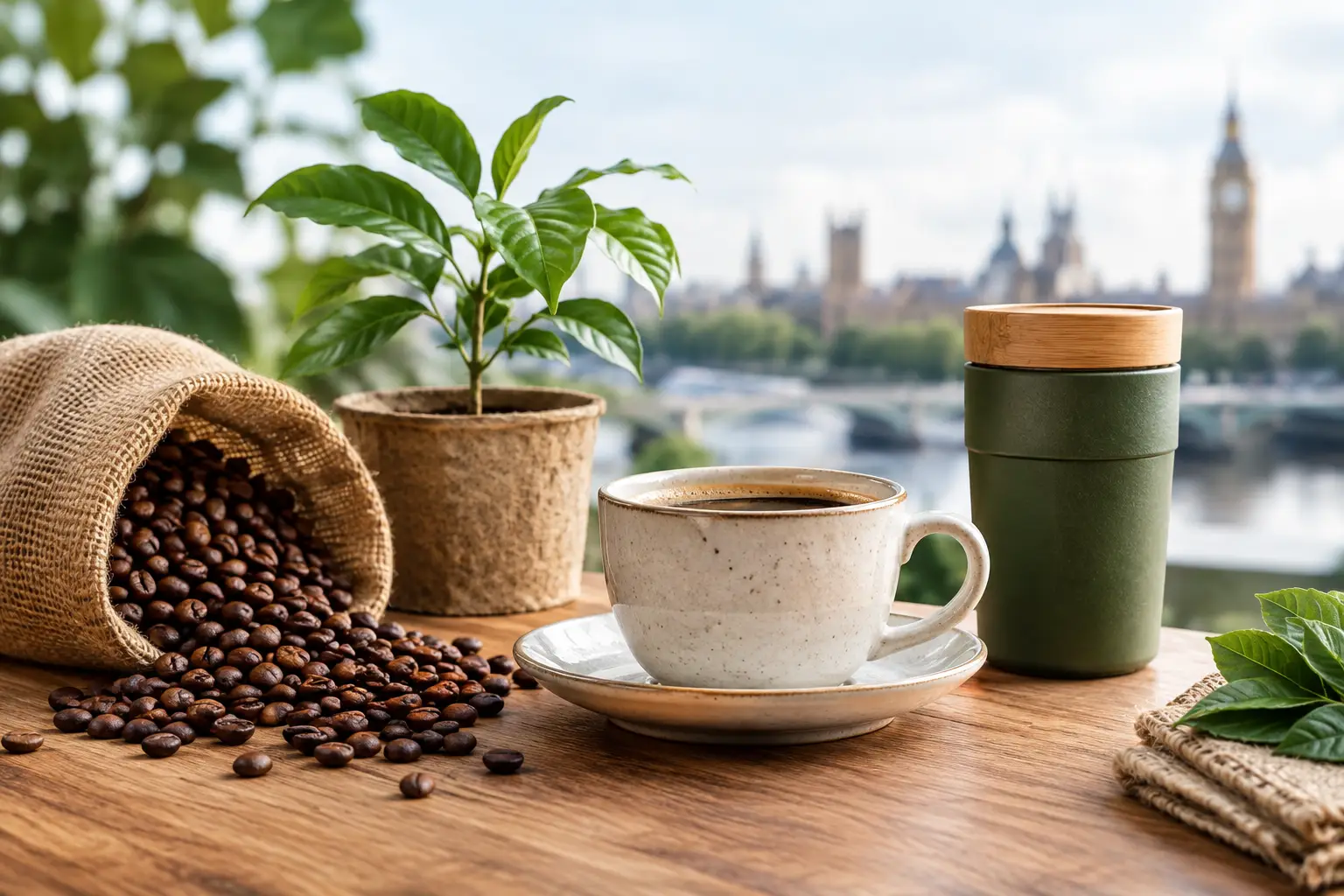
The best sustainable coffee trends UK drinkers are backing do not ask you to settle for a worthy-but-watery brew. They start with the thing that matters at 8am on a drizzly walk along Fore Street: coffee that smells brilliant, tastes properly looked after and comes from people making better choices behind the counter.
Sustainability is not one magic stamp on a takeaway cup. It is how beans are bought, roasted, transported, brewed and served, plus what happens to the milk carton, pastry wrapper and coffee grounds afterwards. For Exeter coffee lovers, the good news is that better practice and better flavour increasingly belong in the same cup.
Sustainable coffee trends UK cafés are taking seriously
The loudest change is a move away from vague green claims towards choices customers can actually see. People want to know where their beans come from, whether a café values its suppliers, and why their flat white tastes different from the one down the road.
That does not mean every independent needs a wall of farming data beside the till. It means being honest about provenance, selecting beans with care and treating each drink as more than a quick transaction. No corporate nonsense, no pretending a bamboo stirrer solves everything.
Traceable beans, not mystery blends
Coffee passes through many hands before it reaches Devon: growers, processors, exporters, importers and roasters. More cafés are choosing roasters that can share useful information about origin, harvest, processing and the people involved. Single-origin coffees can make that story especially clear, while thoughtfully sourced blends offer consistency for everyday espresso.
Traceability is not automatically the same as fairness, and a beautiful farm story does not prove everyone in the supply chain has been paid well. Certifications can help, as can long-term buying relationships and transparent pricing, but each has limits. The encouraging trend is asking better questions rather than accepting a badge as the whole answer.
For the person ordering an Americano before work, this translates into a more interesting cup. You might notice chocolate and caramel one week, bright stone fruit the next, and a coffee that has been roasted to show its character rather than flattened into bitterness.
Local roasting with flavour at the centre
Locally roasted beans are becoming a real point of pride across the UK, and for good reason. Working with nearby roasters can mean fresher deliveries, closer relationships and more opportunity to choose coffees that suit a café’s espresso recipe, water and customers.
It is worth keeping the claim in perspective. Coffee cannot be grown in Britain at commercial scale, so its biggest journey begins overseas. Local roasting does not erase that footprint. What it can do is shorten later stages of the journey, support skilled local businesses and reduce the need for huge, centralised supply chains.
Most importantly, roasting close to home gives baristas a chance to serve coffee at its best. A carefully dialled-in espresso, sweet steamed milk and beans roasted with purpose are not fancy extras. They are the standard a proper independent should chase.
Less waste, without ruining your morning
Disposable cups remain one of the most visible coffee-shop waste issues. Many are made from paper with a plastic lining, which can make recycling more complicated than the bin label suggests. UK cafés are responding with discounts for reusable cups, better cup collection schemes and more thought about lids, napkins and packaging.
Bringing your own cup is a solid habit if you will use it repeatedly and remember to wash it. But it is not a reason to glare at someone who has left the house late, is carrying a toddler, or simply needs a quick coffee to go. The sustainable choice has to work in real life, especially on a busy high street.
Reusable cup systems with a return-and-wash model can help where they are convenient enough to become routine. They require water, energy and reliable returns, so they work best when a local network makes them easy. For many people, the most practical approach is simpler: carry a reusable cup when you can, use a recyclable or accepted disposable option when you cannot, and avoid taking extras you do not need.
Waste reduction also happens out of sight. Better stock planning means fewer unsold pastries and fewer ingredients heading for the bin. Offering food portions people genuinely want, storing milk properly and training staff to make drinks accurately first time all reduce waste while making the visit better.
Coffee grounds deserve a second life
Used grounds are full of potential, whether they are collected for composting, used in community growing projects or processed through local waste schemes. They are not a miracle material, and cafés need a clean, workable collection route for it to make sense. Still, separating grounds from general rubbish is a practical shift with a satisfying local benefit.
Imagine yesterday’s espresso helping feed soil for tomorrow’s flowers or herbs. That is a much better story than sending it all straight to landfill.
The milk question is more complicated than it looks
Plant-based drinks have become a normal part of the menu, not a niche request whispered apologetically at the counter. Oat is often popular in coffee because it steams well and brings gentle sweetness, while soya, coconut and other alternatives each have their own flavour and texture.
Environmental comparisons are useful, but they are not a simple league table. Dairy has a significant climate impact, yet it can be produced in different ways with different outcomes. Plant milks generally use fewer resources in key areas, but ingredients, farming methods, transport and packaging all matter. Almond drinks, for example, raise different water-use questions from oat.
A good café does not turn this into a lecture. It offers choices, charges fairly where possible, keeps milk waste low and makes sure whichever option you order is textured with care. Nobody wants a sustainable swap that leaves their cappuccino thin, split or sad.
Energy and equipment are becoming part of the conversation
Espresso machines, grinders, fridges and dishwashers keep a café moving, but they use serious energy across a long day. More operators are looking at efficient equipment, sensible switch-off routines, regular maintenance and renewable electricity tariffs. These changes are less Instagrammable than a compostable cup, but they can have a meaningful effect.
There is a trade-off here too. Replacing equipment early has its own environmental cost, so the greenest route is not always buying the newest machine. Maintaining reliable kit, repairing what can be repaired and choosing efficiency when replacement is genuinely needed is a more sensible path.
Water matters as well. Espresso needs consistency, and filtration can protect machinery and improve taste. The aim is not to cut corners on cleaning or drink quality. It is to use water deliberately, train teams well and avoid needless running taps and repeat drinks.
Why independent cafés can make the difference
Independent coffee shops are close enough to their customers to make sustainability feel human. You can ask which roaster is on the grinder, spot a reusable-cup discount, or notice whether staff take time over your order. Your regular choices have a direct effect on what a small local business can keep doing.
At Creeks Cuppa, that means putting locally roasted beans, careful preparation and a proper welcome at the Fore Street heart of the day. A coffee shop can be a fast stop before work, but it can also be somewhere to meet a mate, try a seasonal roast or settle in after a wander through Exeter.
Community matters because sustainability is partly about keeping good places going. Supporting cafés that employ local people, buy from local suppliers where practical and create reasons for neighbours to gather keeps more value circulating nearby. It will not solve every problem in global coffee supply, but it is a meaningful part of a better system.
What to look for in your next coffee
You do not need a spreadsheet before ordering a latte. Start by choosing cafés that make clear, specific commitments: beans with known provenance, roasters they can name, staff who understand the coffee, sensible waste-reduction habits and food made to be enjoyed rather than endlessly overpackaged.
Then let taste be part of your decision. If a café cares about sourcing but serves burnt espresso or careless milk, something has gone missing. Sustainable coffee should still be coffee you’ll crave.
Next time you pass through Fore Street, take the easy win that suits your day: bring your cup if it is with you, try the seasonal bean, sit in rather than take away, or simply choose the independent making each drink with care. Small habits become much more powerful when they are enjoyable enough to keep.